
Found a sick, injured or orphaned koala? Call WIRES on 1300 094 737 or submit a Rescue Form. Do not handle the koala. If safe, place a washing basket or ventilated box over it to keep it contained until WIRES arrives.
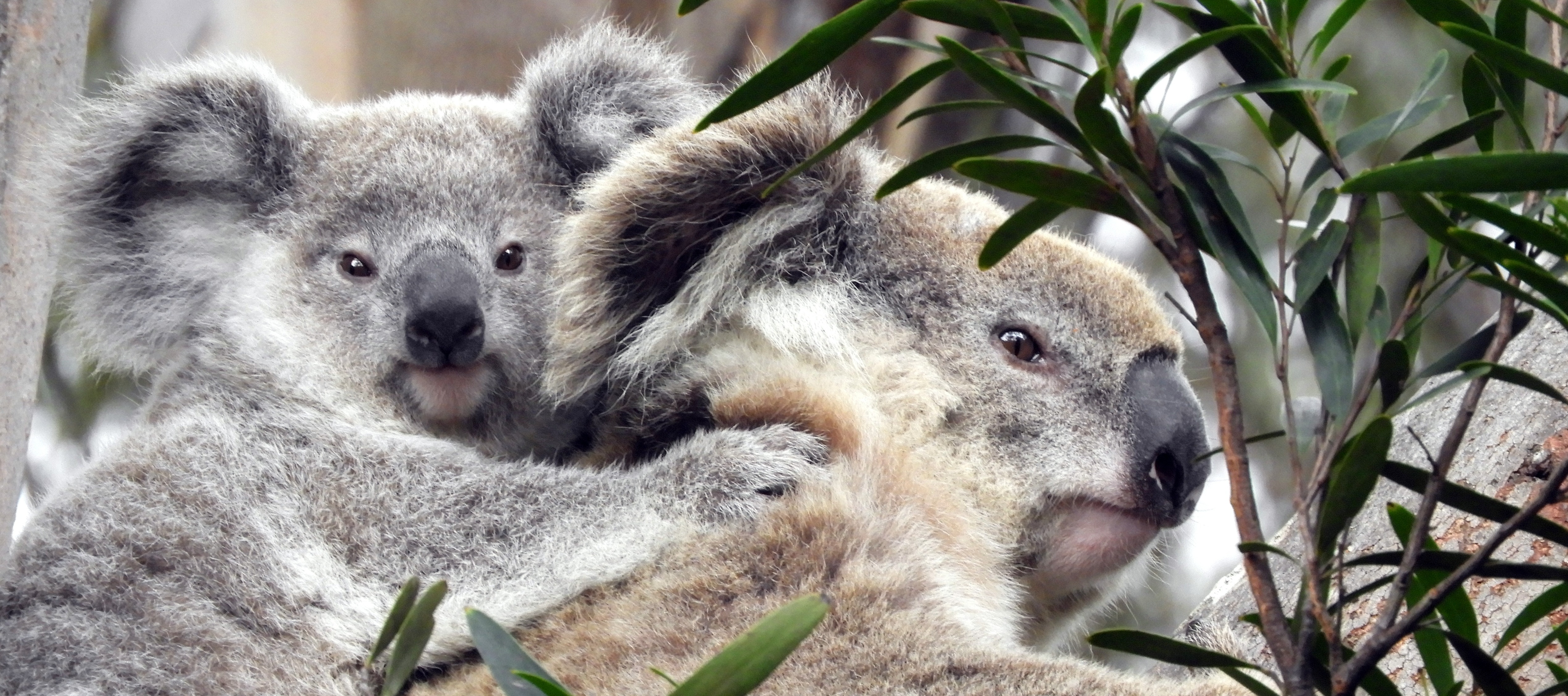
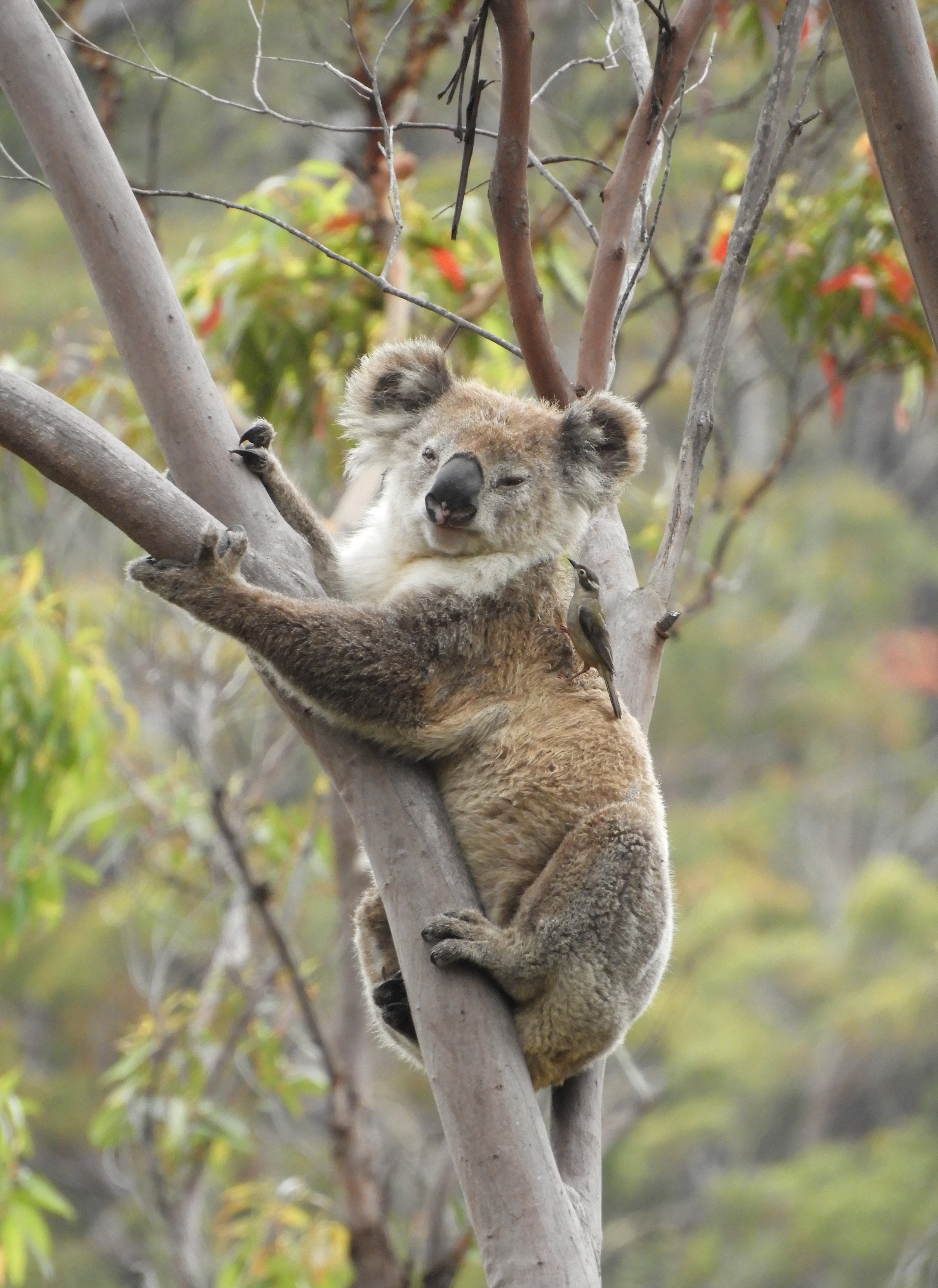
Koalas (Phascolarctos cinereus) are a type of mammal called a marsupial. They are known for their fluffy ears, furry grey body and large black nose. Koalas also have strong arms and legs, and sharp claws for climbing. They have a hard bottom, which allows them to sit comfortably in the forks of trees.
Sutherland Shire is home to a healthy population of approximately 200 koalas. Koalas have been observed throughout the Shire’s urban and natural areas, from Barden Ridge to Loftus, Woronora, Heathcote and Engadine. There is also a number known to be living in and travelling through our adjoining National Parks.
Behaviour and habitat
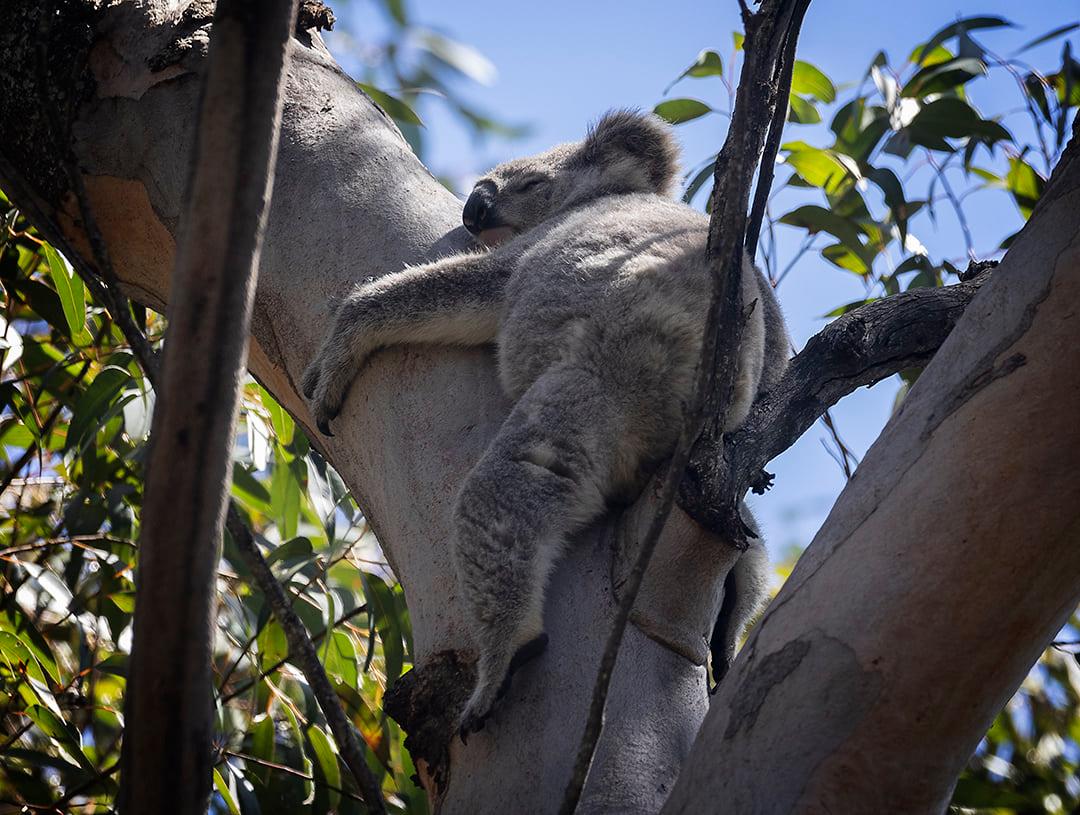
Koalas are solitary animals who feed for 20% of the day and sleep for the remaining 80%. They are most active pre-dawn and at dusk. Koalas are selective about their food and feed primarily on the leaves of eucalyptus trees. One of the most important factors influencing the distribution and numbers of koalas in any area is the presence and density of their food tree species.
The main food sources for koalas in our region are the Swamp mahogany (E. robusta), Forest red gum (E. tereticornis), Tallowwood (E. microcorys), and Grey gum (E. punctata). Koalas also require a range of other trees across their habitat for resting and shelter.
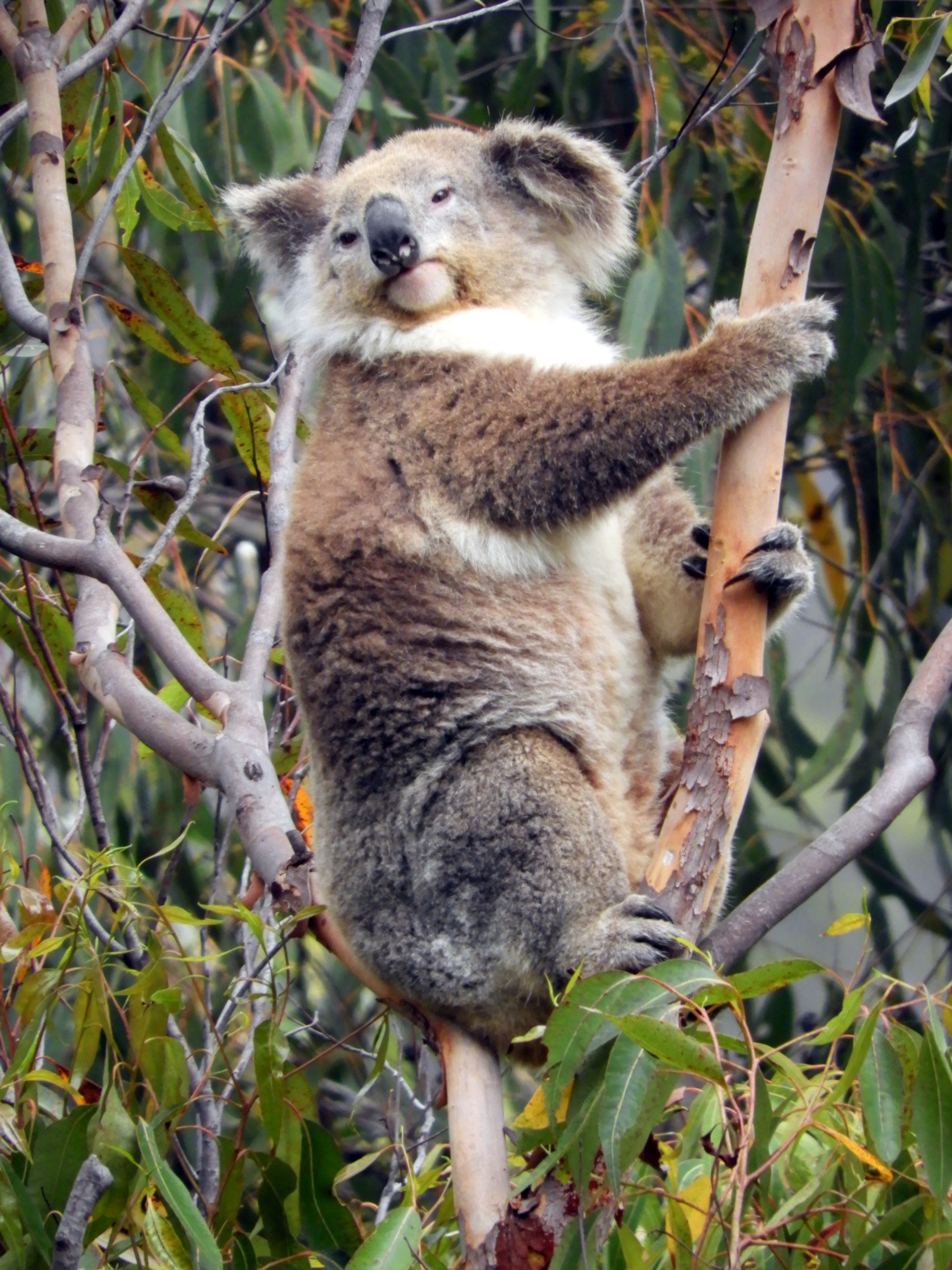 Photos provided by Steve Anyon-Smith
Life cycle and reproduction
Male koalas are considered mature and begin breeding at 3-4 years of age. Females can breed from 2 years of age, and give birth to 1 joey per year. The gestation period for a female koala is 35 days. Koalas give birth to an underdeveloped young – known as a joey – which lives in the mother’s pouch for approximately 6 months before emerging for the first time. Joeys then ride on their mother’s back for the next 6-12 months, before leaving their mother to find their own ‘home range’ at 2-3 years of age. The average lifespan for a koala in the wild is 10-12 years, though females can live up to 18 years.
Koalas need our help
Koalas are listed as ‘Endangered’ under the NSW Biodiversity Conservation Act 2016 and the Commonwealth Government’s Environment Protection and Biodiversity Conservation Act 1999. It is now more important than ever that we take action to protect these national icons and their habitat.
Some of the biggest known threats to koalas include habitat loss (including bushfires), vehicle strikes, and attacks by domestic animals. In partnership with the NSW Koala Strategy, Council has developed a plan to ensure southern Sydney remains home to a thriving koala population in one hundred years’ time.
What you can do
- One of the easiest ways to protect koalas is to keep your dogs on a leash, unless in one of our designated off-leash areas.
- Report stray or roaming dogs to Council
- If you see a koala in your yard or a natural area, report it on 'I Spy Koala'. Read more here
How Council is Protecting Koalas in Sutherland Shire
Koalas continue to live, breed and move through parts of Sutherland Shire. Council is actively working to protect this regionally significant population through targeted actions that reduce threats, improve habitat and support safe movement across the landscape.
Council is implementing a coordinated program of actions based on the 2026–2031 Koala Management Plan, including:
Protecting and restoring habitat
- Protecting existing koala habitat on public and private land
- Delivering habitat restoration works such as weed removal, tree planting and canopy protection
- Retaining and restoring key koala food trees and shade trees
- Improving habitat connectivity through corridor restoration across the Shire
- Working with landholders through stewardship programs to enhance habitat on private land
Read the KMP here
Reducing key threats to koalas
Council is targeting the main risks to koalas, including:
- Vehicle strike mitigation at known hotspots
- Dog attack prevention through education, fencing design and potential Wildlife Protection Areas
- Koala-safe planning controls for new development (e.g. fencing, pools, habitat retention)
- Fire management practices that protect koalas and their habitat
- Ongoing invasive species and weed management
Community education and engagement
- Delivering education programs, workshops and campaigns
- Promoting responsible pet ownership and wildlife-safe properties
- Supporting citizen science and reporting of koala sightings
- Installing signage and awareness materials in key areas

Koala Warning Signage
Council has installed vehicle‑activated koala warning signs in areas with frequent koala movement and recorded road incidents.
Key features:
- Located at known koala hotspots such as Barden Ridge, Woronora, Engadine and Sandy Point
- Signs activate when vehicles approach, with flashing lights and changing messages
- Rotated monthly during peak movement periods (August–February)
- Supported by infrastructure at 12 locations across the Shire, with multiple active signs in use

These signs are designed to increase driver awareness. However, Council recognises that signage works best when combined with other measures such as traffic calming, fencing and safe crossing infrastructure.
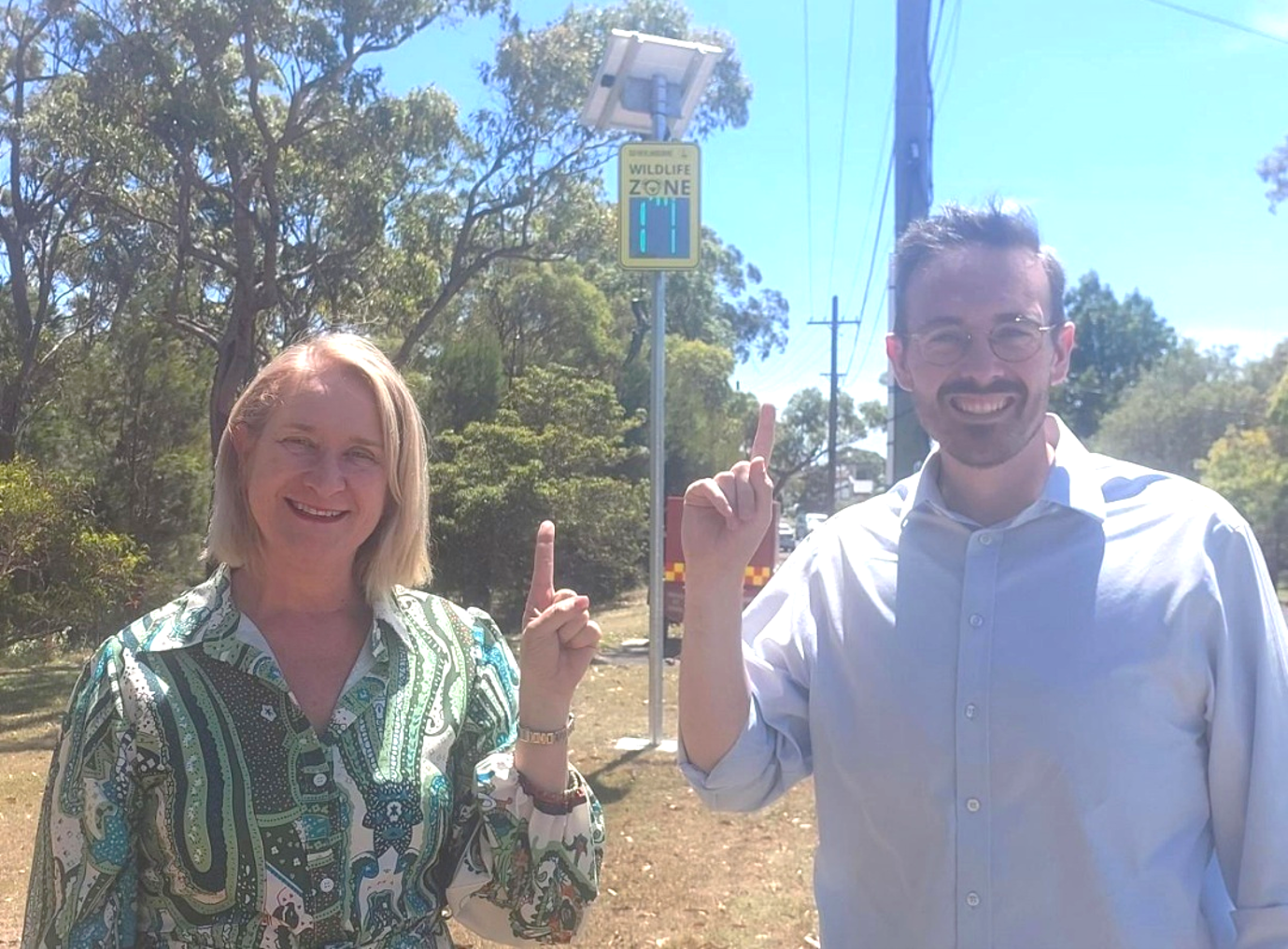 Facebook post by Mayor Jack Boyd featuring local MP, Maryanne Stuart, dated February 2026.
Koala Habitat & Sightings Map
Council maintains detailed mapping of koala habitat, movement corridors and sighting data to guide conservation actions.
The mapping includes:
- Likely koala habitat (areas containing key food trees)
- Occupied habitat based on verified sightings
- Movement corridors connecting habitat areas
- Vehicle strike hotspots and priority action areas
This mapping is regularly updated and used to inform planning, conservation works and community information.
View the Koala Map
Explore Koala Habitat and Sightings Map
Monitoring and Reporting
Council tracks progress and outcomes through:
- Ongoing habitat and population monitoring
- Use of drone, acoustic and field surveys
- Community-reported sightings data
- Annual public reporting on koala outcomes
This ensures actions remain adaptive and evidence-based over time.
Why This Matters
Sutherland Shire supports a small but regionally significant koala population. Protecting habitat, improving connectivity and reducing threats – especially vehicle strike – is essential to ensuring koalas remain part of the Shire’s environment into the future.
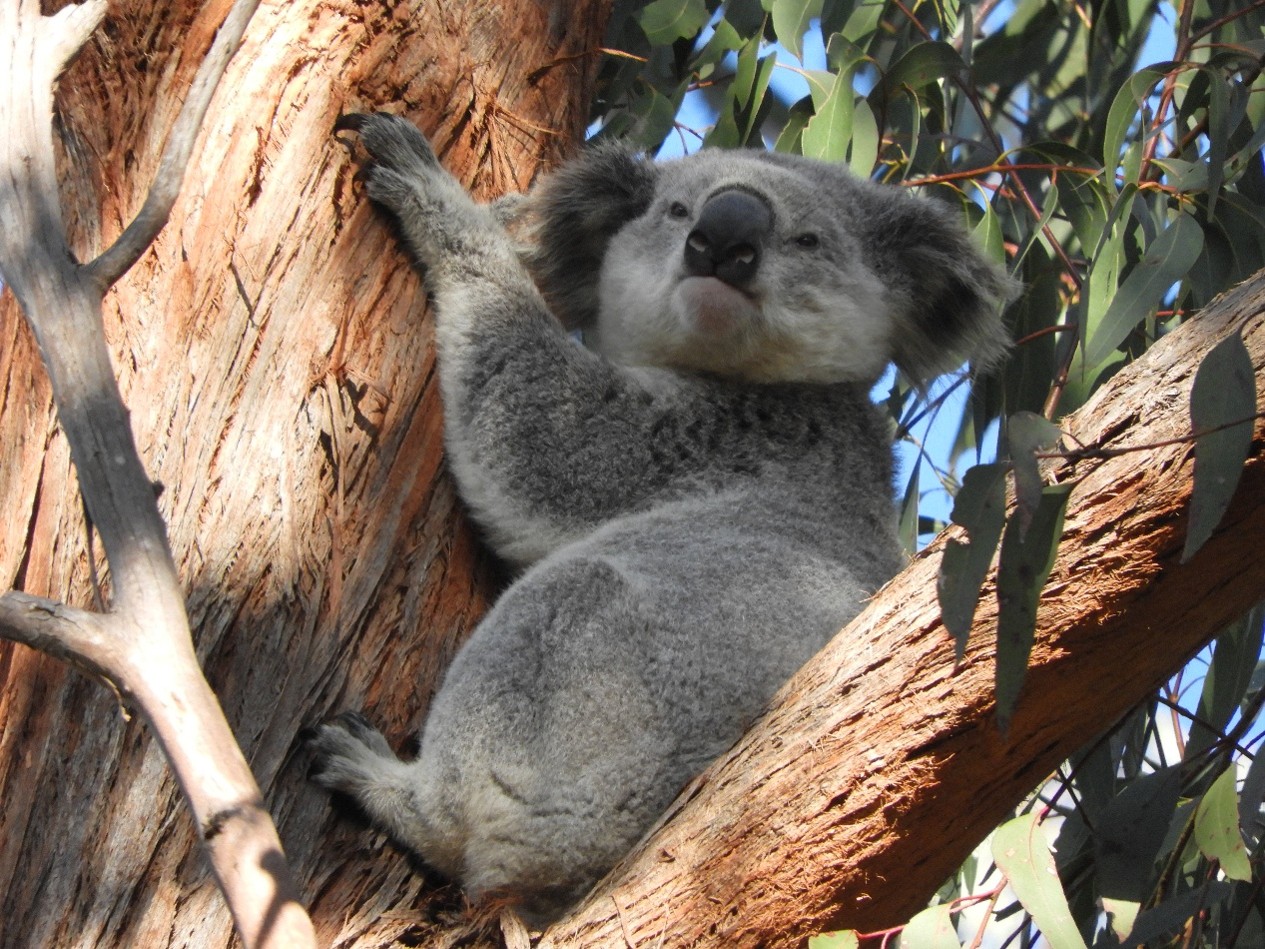
Koala at rest in a tree.
Useful links
- The NSW Koala Strategy | Threatened species | Environment and Heritage- NSW Koala Strategy is supporting a range of conservation actions that will provide more habitat for koalas
- National Koala Monitoring Program - DCCEEW- DCCEEW in partnership with CSIRO is leading a program to track and assess koala population trends