
Climate change poses challenges to our environment, human health and daily way of life - from more frequent and intense weather events to rising temperatures and shifting ecosystems.
Council is committed to working collaboratively to tackle climate change and safeguard the environment and the community’s future, using a two-pronged approach:
- Mitigation: reducing atmospheric carbon emissions to limit future impacts
- Adaptation: preparing for and responding to the changes that are already underway.
We believe that everyone, individuals, community groups, businesses, and all levels of government, has a vital role to play in building a more sustainable and resilient Sutherland Shire.
Together, we can create a healthy and sustainable place to live, now and for generations to come.
Mitigation: Taking action to reduce emissions
In 2021, Council adopted ambitious science-based targets aligned to state and federal government policies:
- net zero emissions by 2030 for Council’s operations
- net zero emissions by 2050 for the local community.
These targets are at the heart of our Climate Strategy 2050 - Thrive. Design. Lead - PDF - 4709 KB, which outlines the actions we are taking to reach net zero.
We’ve already made significant progress, achieving 59% of our net zero goal for Council operations by:
- switching to 100% renewable electricity
- reducing reliance on fossil gas at our leisure centres
- electrifying our vehicle fleet.
To support our community in reducing emissions, we’re delivering a range of initiatives towards a low-carbon future, including:
- sustainability education events and workshops
- 'Getting Started with Solar' information and calculator
- launching FOGO (Food Organics and Garden Organics) recycling
- improving access to public and active transport
- promoting cleaner transport options through our Electric Vehicle (EV) Position Paper (coming soon).
Council’s emissions profile in 2020-21 was made up of:
- 0% electricity
- 55% fleet diesel
- 33% fossil gas

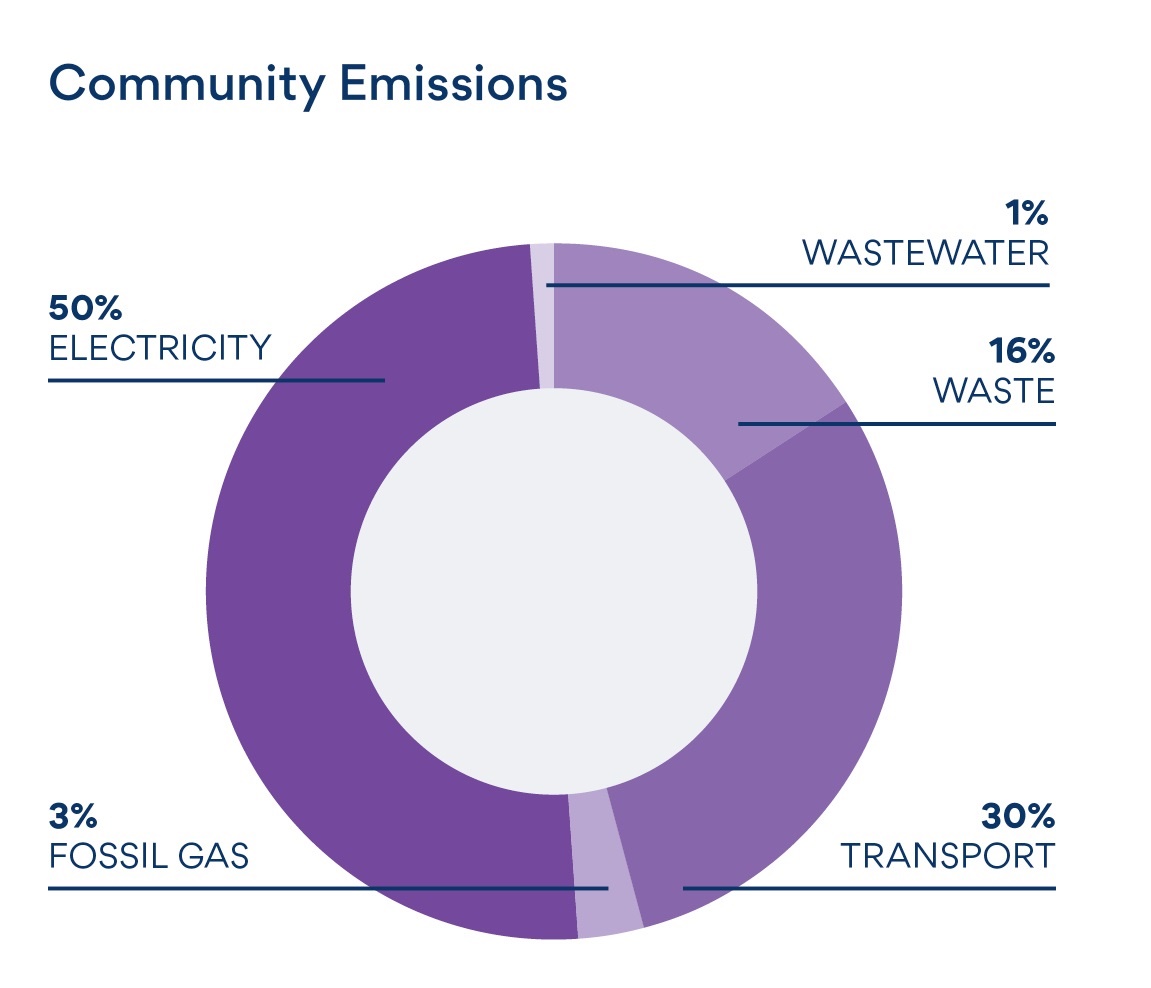
Sutherland Shire area's emissions profile in 2020-21 was made up of:
- 50% electricity
- 30% transport
- 16% waste
Adaptation: Building a Resilient Future
While reducing emissions is essential, we must also prepare for the unavoidable impacts of climate change. Adaptation means strengthening our resilience to challenges such as:
- more frequent and intense natural disasters
- shifts in water availability
- increasing pressure on our biodiversity and ecosystems.
To guide this work, Council is developing our draft Resilience Strategy. Please visit Planning and Resilience to learn more.
Useful links
- Australian Government Department of Climate Change, Energy, the Environment and Water
- NSW Government Climate and Energy Action and Legislation
- Adapt NSW resources for Climate change in Metropolitan Sydney
- Adapt NSW information on Adapting to Climate Change
- City of Sydney Resilient Sydney Strategy 2025 - 2030
- USA National Aeronautics and Space Administration (NASA) website - Responding to Climate Change
- Electric Vehicles - Factual information about EVs